


Most people who walk in with a piece of jewelry are not thinking about technical grading or market charts. The concern is much simpler. You want to know if the number you’re given is fair. You want to avoid that quiet doubt that lingers after you leave, wondering if you could have done better somewhere else.
The pricing process answers that concern when it’s explained clearly. When you understand how value is determined, you don’t have to second-guess the outcome or compare conflicting opinions from different places.
For many sellers, this is the first time they’ve looked closely at what they own. That unfamiliarity creates hesitation. A transparent pricing process removes that tension and replaces it with clarity.
What Most Sellers Miss About Jewelry Pricing
There is a common assumption that jewelry has a fixed value. In reality, pricing is influenced by multiple layers, and each piece is evaluated based on what it offers in the current market.
Retail price often creates confusion. What you paid includes design, branding, and markup. The resale market works differently. Buyers focus on the intrinsic value of the materials and how those materials can be resold or repurposed.
Another detail many overlook is demand. Even a well-made piece may vary in value depending on current buying trends. Diamonds, gold, and designer pieces each follow their own market behavior.
When the pricing process is explained step by step, these differences start to make sense. You see how each element contributes to the final number instead of viewing it as a random offer.
Key Factors That Shape the Pricing Process
Every jewelry pricing process begins with the same foundation: understanding the materials and their quality.
For diamonds, the evaluation centers on the well-known characteristics of carat weight, color, clarity, and cut. Each of these affects how desirable the stone is in the resale market.
For gold and other metals, weight and purity take priority. The karat level determines how much pure gold is present, and that directly connects to current market prices.
Craftsmanship and brand also play a role in certain cases. Some designer pieces carry additional value due to recognition and demand. Others are valued mainly for their materials.
Condition matters as well. A well-maintained piece often holds a stronger appeal compared to one with visible wear or damage.
The pricing process brings all of these elements together. Instead of focusing on a single factor, it builds a complete picture of the item.
How Diamonds Are Carefully Evaluated for Pricing
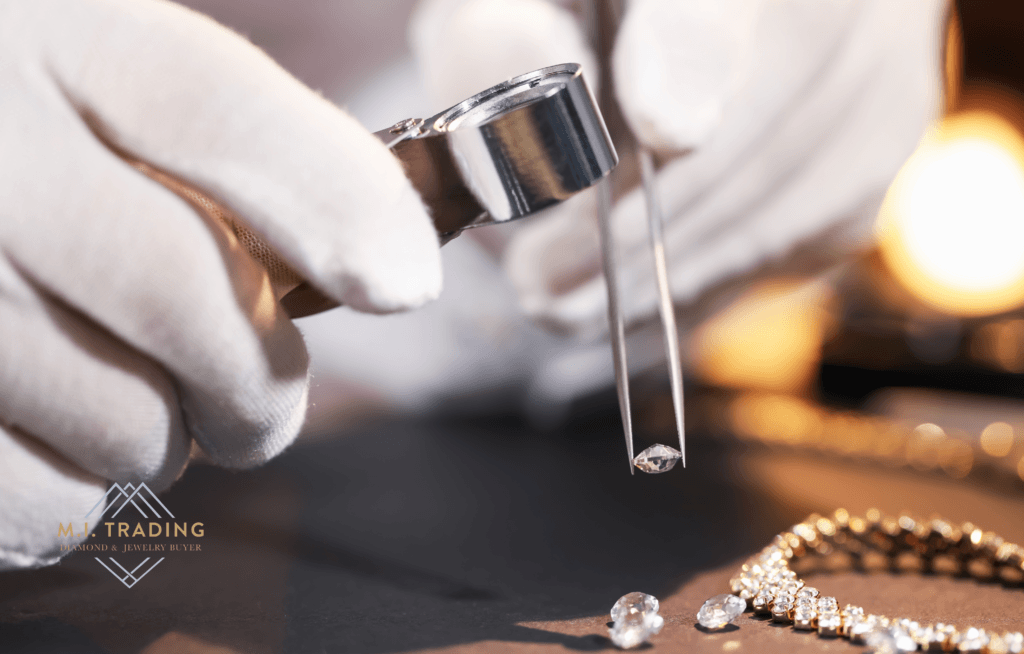
Diamond evaluation requires attention to detail and experience. Each stone is examined individually, even when it is part of a larger piece.
Carat weight is measured precisely, as even small differences can influence value. Color is assessed under proper lighting conditions to determine how close the diamond is to a colorless grade. Clarity involves identifying internal and external characteristics that affect appearance.
Cut plays a major role in how the diamond reflects light. A well-cut diamond often appears more vibrant, which can increase its desirability.
Beyond these standard factors, the pricing process also considers shape, proportions, and overall visual appeal. Two diamonds with similar grades can still differ in value based on how they look to the eye.
This level of evaluation ensures that pricing is grounded in real characteristics, not assumptions.
The Truth About Gold and Precious Metal Pricing
Gold pricing follows a more direct path compared to diamonds. The process begins with identifying the metal type and its purity. Common stamps such as 10K, 14K, and 18K indicate how much gold is present.
The item is then weighed, often after removing any non-gold components like stones or clasps. This ensures that only the gold content is considered.
Market price plays a central role here. Gold values change daily, and the pricing process reflects those movements. The value you receive is tied to the current rate at the time of evaluation.
Silver and platinum follow similar principles, though their market behavior differs. Each metal has its own pricing structure based on demand and availability.
Understanding this part of the pricing process helps remove confusion, especially for those expecting jewelry value to match retail pricing.
Why the Same Item Can Receive Different Prices
One of the most common questions sellers ask is why offers vary between buyers. The answer lies in how each buyer approaches the pricing process.
Some buyers focus strictly on material value. Others consider resale potential, including whether the piece can be sold as-is or needs to be broken down.
Overhead costs, business models, and target markets also influence pricing. A buyer specializing in high-end diamonds may value certain stones differently than a general jewelry buyer.
Experience plays a role as well. A trained professional can recognize subtle details that affect value, leading to a more accurate evaluation.
When you understand these factors, differences in pricing feel less random. You can see how each offer is shaped by a specific perspective.
Hidden Details That Quietly Influence Pricing
Several smaller details can influence the final price without being immediately obvious.
Certification is one example. A diamond with a recognized grading report often carries more clarity in its evaluation, which can affect pricing.
Setting style can also matter. Some designs are easier to resell, while others may require adjustments before entering the market again.
Wear and repairs influence value as well. Chips, scratches, or loose settings can lower appeal and require additional work.
Even timing plays a role. Market demand can shift, especially for certain styles or materials.
The pricing process takes these details into account. Each one contributes to a more accurate and realistic valuation.
What a Clear Pricing Process Should Feel Like
A well-explained pricing process feels calm and straightforward. You are given time to understand each step without pressure to make a decision.
The conversation should focus on explanation first. You should be able to ask questions and receive clear answers about how value is determined.
A private setting adds comfort. It allows you to focus without distractions and discuss your item openly.
Clarity replaces uncertainty when the process is handled this way. You leave with a clear understanding of your jewelry, whether you choose to sell or keep it.
This approach reflects a commitment to transparency and respect for the seller’s decision.
Common Misunderstandings About Jewelry Pricing
Many sellers expect their jewelry to hold the same value as when it was purchased. Retail pricing includes design, branding, and store overhead, which do not carry over into resale.
Another misunderstanding involves sentimental value. Personal meaning is important, but it does not influence market pricing.
Some believe that all buyers use the same pricing process. In reality, methods and priorities can differ, leading to varied results.
There is also confusion about online estimates. Without a physical evaluation, it is difficult to assess key details accurately.
Clearing up these misunderstandings helps create realistic expectations and reduces frustration during the process.
How to Recognize a Fair and Honest Price
A fair price is supported by a clear explanation. You should understand how each part of your item contributes to the final number.
Transparency is a strong indicator. When the pricing process is explained step by step, it shows that the evaluation is grounded in real factors.
You should feel comfortable asking questions. A professional buyer welcomes those questions and provides straightforward answers.
Consistency also matters. The explanation should align with what you see and what you know about your item.
When these elements are present, confidence replaces doubt. You can make a decision based on understanding rather than uncertainty.
What Happens After the Pricing Process Is Explained
Once the pricing process is complete, the next step is entirely up to you. There is no requirement to move forward.
Some sellers choose to take time and think about it. Others decide on the spot. Both approaches are valid.
The important part is that you leave with clarity. You understand what your jewelry is worth and why.
This removes the pressure that often comes with selling valuable items. You are making a decision based on knowledge, not urgency.
A Simple Way to Get Clarity Before You Decide
If you’re unsure about your jewelry or simply want to understand its value, the pricing process offers a clear starting point.
A private evaluation allows you to see how your item is assessed in real time. You can ask questions, learn about the details, and gain a better sense of its place in the market.
You don’t need prior knowledge to begin. The process is designed to guide you step by step.
When you leave with a clear understanding, you no longer have to wonder if you’re making the right choice. You have the information you need to decide with confidence.