


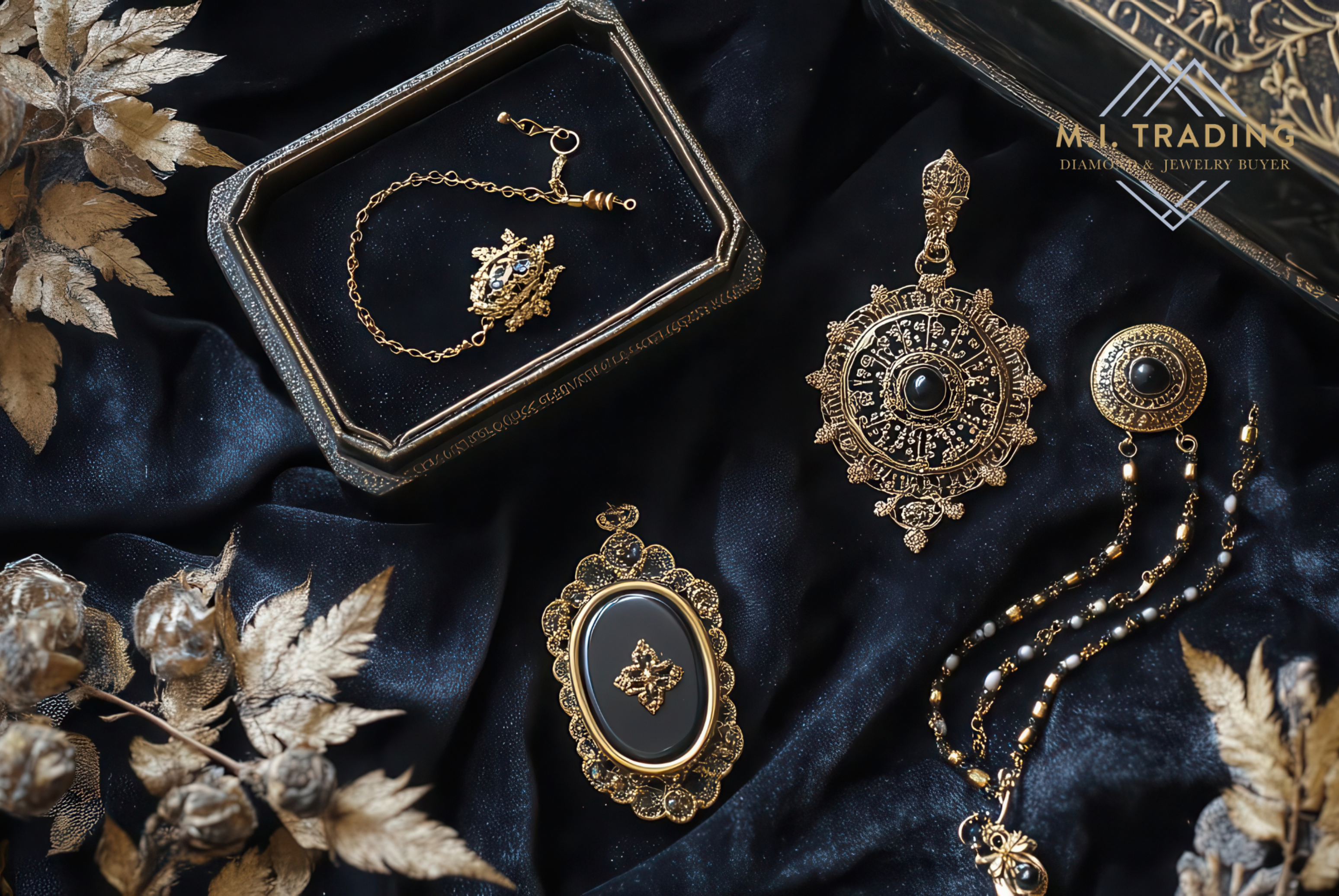
A collection of vintage treasures, antique jewelry fascinates collectors and fashion lovers with its unique and beautiful craftsmanship. Each one-of-a-kind piece of history tells a story, capturing the artistry and spirit of its era. In this article, we’ll explore the world of antique jewelry, offering insights into its rich background, how to identify genuine pieces, popular styles, proper care, investment tips, and more.
The Rich History Behind Antique Jewelry Pieces
The rich history of antique and vintage jewelry offers a fascinating glimpse into the cultural and artistic expressions of past eras. Vintage and antique pieces, including estate jewelry, reflect the aesthetics and craftsmanship of their time. From the delicate, nature-inspired designs of Georgian jewelry (1714–1837) to the romantic styles of the Victorian and Edwardian periods, each item captures a unique story. Moving into the 20th century, the bold, geometric motifs of Art Deco jewelry showcase a striking evolution in design, making each piece a timeless testament to its era’s spirit.
Identifying Authentic Antique Jewelry: Key Indicators
Identifying authentic antique jewelry is crucial for anyone seeking to curate a truly exquisite jewelry collection. When evaluating a collection of antique pieces, look for hallmarks and maker’s marks, which often reveal the metal content and origin, offering important clues about age and authenticity. Handcrafted details, like slightly asymmetrical designs or unique stone settings, also suggest authenticity, as mass production was rare in earlier times. Genuine materials, such as old-cut diamonds and natural pearls, frequently appear in antique jewelry. If you’re looking to add a stunning diamond ring to your estate, experts recommend antique styles for their unmatched craftsmanship. Consulting with a reputable jeweler or evaluator can further ensure the authenticity of your selections.
Popular Styles and Eras of Antique Jewelry
Antique jewelry encompasses a wide range of styles, each reflecting the artistry and cultural trends of its time through stunning jewelry pieces like earrings, bracelets, pendants, brooches, rings, and necklaces. During the Victorian Era (1837–1901), designs were romantic and ornate, often featuring gemstones such as amethyst and garnet set into lockets, brooches, and intricate rings. The Art Nouveau period (1890–1910) introduced flowing lines and natural motifs, with a special emphasis on pendants and earrings crafted with enamel and inspired by nature. In contrast, the Art Deco era (1920–1935) embraced geometric shapes and bold colors, bringing a fresh, modern flair to everything from necklaces to bracelets. Understanding these distinctive styles helps collectors and enthusiasts recognize and appreciate truly remarkable antique jewelry pieces.
Caring for Your Precious Antique Jewelry Collection
Proper maintenance is essential to preserve the beauty and integrity of your finest antique jewelry pieces, whether it’s a treasured engagement ring, a platinum locket, or a rare jewel from a curated selection. For cleaning, gently use a soft brush with mild soap and warm water, avoiding harsh chemicals that can harm delicate materials. When it comes to storage, keep each piece in a dry environment, preferably in separate soft pouches or compartments, to prevent scratches and tangling. Regular inspections are equally important; check for loose stones, weakened clasps, or settings that may need adjustment or resizing services. By following these care practices, your antique jewelry can be cherished and passed down for generations.
Spotting Reproductions: Ensuring Genuine Acquisitions
With reproductions becoming increasingly common, distinguishing genuine antique jewelry, especially pieces from the early 20th century, is essential. Carefully examine craftsmanship; authentic items often reveal hand-finished details, while reproductions tend to show the uniformity typical of modern manufacturing. Pay close attention to the patina as well; a true antique, whether a delicate pendant or a cherished stone ring, will exhibit the natural aging process, unlike reproductions that often appear overly bright or uniform. When uncertainty arises, it’s wise to seek expert evaluation from a professional evaluator or a jeweler specializing in vintage and antique treasures. Being diligent in your assessment ensures that your acquisitions are truly authentic.
The Sentimental Value of Heirloom Antique Jewelry
Beyond its monetary value, antique jewelry holds deep personal significance. Family heirlooms, lovingly passed down through generations, serve as powerful connections to ancestors and shared histories. Commemorative pieces, often gifted to celebrate milestones or special occasions, carry treasured memories and traditions within their intricate designs. Every ring, brooch, or pendant tells a story, adding layers of meaning to its beauty. By preserving and wearing these heirloom pieces, we honor the narratives they represent and keep family legacies alive for future generations.
Understanding the Value of Your Antique Jewelry
Before making any decision about selling or holding onto your antique jewelry, it’s crucial to fully understand its true value. Antique jewelry is much more than a beautiful accessory; its worth is shaped by a blend of historical significance, fine craftsmanship, rarity, and sometimes even a fascinating backstory tied to notable figures. These factors combined can influence both its financial and sentimental value, making it important to evaluate each aspect carefully.
Factors Influencing the Value of Antique Jewelry
Several key elements determine how much an antique jewelry piece is truly worth:
- Age and Era: Pieces originating from specific historical periods, such as the romantic designs of the Victorian era or the sleek, geometric motifs of the Art Deco movement, often hold greater appeal for collectors and can command higher prices. Understanding the stylistic characteristics of these eras helps in accurately placing and valuing your piece.
- Condition: The overall state of preservation is a major factor. Well-maintained jewelry, with minimal repairs or restorations, typically holds more value. Damage, missing stones, or extensive alterations can diminish a piece’s worth, even if it is historically significant.
- Materials and Craftsmanship: The quality of materials, such as old-mine cut diamonds, natural pearls, or high-grade platinum, along with the artistry involved in the piece’s creation, play a critical role. Jewelry handcrafted with intricate detailing and superior techniques tends to be valued much higher than mass-produced counterparts.
- Provenance: The documented history of a piece can greatly enhance its desirability. Jewelry with provenance, meaning it has been owned by notable individuals, featured in exhibitions, or accompanied by historical documentation, can significantly increase in value, offering buyers a richer story along with their purchase.
Taking time to research and understand these factors can help you appreciate your antique jewelry more deeply and make an informed decision about whether it’s better to keep it within the family or offer it to a new collector who will value its unique story.
Financial Implications of Selling Antique Jewelry
Deciding to sell antique jewelry can offer meaningful financial advantages, but it’s important to carefully weigh these benefits against the potential downsides. Given the sentimental value often attached to such pieces, this decision goes beyond simple economics and requires thoughtful consideration.
Potential Benefits of Selling
- Immediate Access to Funds: One of the most obvious advantages of selling antique jewelry is the ability to quickly convert your assets into cash. Whether you’re facing urgent financial needs, planning a significant life event, or looking to fund new investments, selling a valuable piece can provide the liquidity needed without taking on debt.
- Taking Advantage of Favorable Market Conditions: Timing can make a significant difference. If there is a high demand for antique jewelry, particularly for pieces from popular eras like Victorian, Edwardian, or Art Deco, you could potentially secure a strong selling price. Specialized market trends, such as increased interest in vintage engagement rings or estate jewelry, can create windows of opportunity for sellers.
- Simplifying Your Collection: Some sellers find that parting with a few pieces allows them to refine and curate their jewelry collection, focusing on items that hold deeper sentimental meaning or align better with their current lifestyle and tastes.
Possible Drawbacks of Selling
- Market Volatility: The jewelry market, much like any collectibles market, can be unpredictable. Economic shifts, changing consumer preferences, and global trends can all impact the value of antique jewelry. If you sell during a market slump, you might receive far less than the piece’s potential peak value.
- Difficulty in Replacement: Selling a unique or one-of-a-kind piece can bring a sense of finality that’s difficult to reverse. Antique jewelry often has historical, artistic, and emotional value that cannot be easily replicated. If you later experience seller’s regret, finding a comparable replacement, especially one with similar provenance or sentimental significance, could prove challenging, if not impossible.
- Emotional Considerations: Beyond financial factors, the emotional ties to antique jewelry must not be underestimated. Pieces inherited from loved ones or associated with important life milestones often carry a depth of meaning that outweighs their market value.
Striking the Right Balance
Ultimately, the decision to sell or hold onto your antique jewelry is deeply personal. It’s shaped not only by financial needs but also by emotional attachments, family traditions, and an appreciation for the artistry and history embodied in each piece.
Before moving forward, it’s wise to take a holistic approach: get a professional evaluation to understand the true value of your jewelry, assess current market trends, reflect on the emotional significance, and explore different selling avenues if you choose to proceed.
Making an informed, well-considered decision ensures that whether you decide to sell or keep your antique jewelry, it’s a choice you’ll feel confident and satisfied with over the long term.