


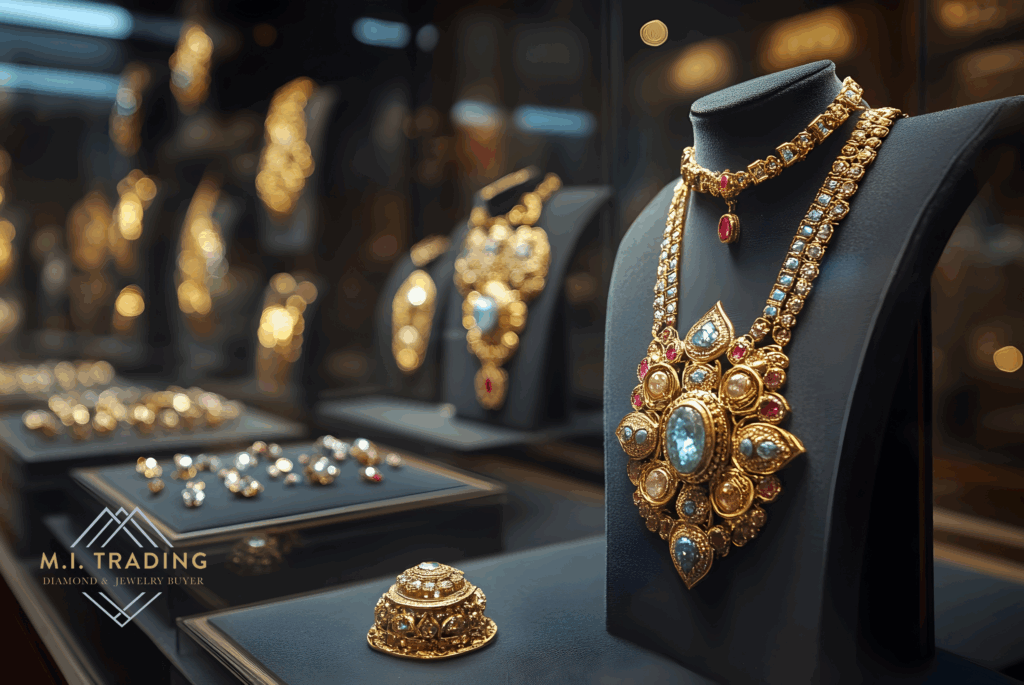
Selling estate jewelry is not just a financial decision.
For many people, it comes with uncertainty, pressure, and sometimes emotion.
Maybe it was inherited. Maybe it’s tied to a past relationship. Maybe it’s just been sitting in a drawer for years.
And the hardest part is this:
You don’t really know what it’s worth… or who to trust.
That’s where most people get stuck.
What Most People Assume (And Why It Can Backfire)
Before we get into the “how,” it’s important to address a few common assumptions:
- “I should get an appraisal first”
- “I need to go to multiple buyers immediately”
- “Online buyers might pay more”
- “All gold and jewelry buyers are basically the same”
Some of these sound logical.
But in real situations, they often lead to confusion or missed opportunities.
In many cases, people walk into appointments already overwhelmed.
What Actually Determines the Value of Estate Jewelry
Not all estate jewelry is valued the same way.
Here’s what typically matters most:
1. The diamonds or gemstones
- Quality (cut, clarity, color, carat)
- Market demand for that specific type
2. The metal
- Gold (10k, 14k, 18k)
- Platinum or silver
- Current market prices
3. The piece itself
- Designer or brand
- Condition
- Whether it can be resold as-is or needs to be broken down
Most people are surprised by this:
Sentimental or retail value usually doesn’t match resale value
And that’s not anyone trying to undervalue your piece.
It’s just how the secondary market works.
The Biggest Mistake Sellers Make
The most common mistake is rushing.
People often:
- Accept the first offer out of discomfort
- Or bounce between buyers without understanding what they’re being told
That leads to one thing:
Doubt after the decision is made
And that’s what we want to avoid.
What a Transparent Evaluation Should Look Like
A proper evaluation should feel calm, not rushed.
You should be able to see:
- How your item is tested
- How the weight is measured
- How the value is calculated
- What parts of the piece matter most
If someone just gives you a number without explanation, that’s a problem.
A good evaluation should leave you thinking:
“Okay… now I understand what I have.”
Even if you decide not to sell.
Should You Get Multiple Offers?
This is where people expect a simple “yes.”
But the honest answer is:
It depends on whether you understand the first evaluation.
If you:
- Don’t understand how the value was determined
- Or feel unsure about the explanation
Then yes, it makes sense to compare.
But if someone clearly walks you through everything…
You may not need to shop around as much as you think.
Selling Online vs. In Person
Online buyers can seem convenient.
But here’s what many people don’t realize:
- You usually don’t see the evaluation
- You’re shipping your item before knowing the final number
- Adjustments can happen after inspection
For high-value or sentimental pieces, many sellers prefer:
A private, in-person evaluation where everything is explained clearly
What to Bring When Selling Estate Jewelry
You don’t need much.
But it helps to bring:
- The jewelry itself (of course)
- Any certificates or paperwork (if available)
- Multiple pieces, even broken ones
Even items you’re unsure about can be looked at.
What If You Decide Not to Sell?
This part matters.
You should never feel pressured to make a decision on the spot.
A proper evaluation should give you:
- Clarity on value
- Confidence in your options
- Space to decide
Some people sell immediately.
Others think about it and come back later.
Both are completely normal.
What Sellers in Austin Often Say After the Process
After sitting through a proper evaluation, most people say something like:
- “I didn’t realize how this worked before”
- “I finally understand what I have”
- “I feel better knowing I didn’t rush”
That sense of clarity is what matters most.
If You’re in Austin and Not Sure Where to Start
If you’re considering selling estate jewelry and want a clear, pressure-free experience:
M.I. Trading offers private, one-on-one evaluations in Austin.
You’ll sit directly with Moran, who has over 20 years of experience in the diamond and jewelry industry.
The focus is simple:
- Help you understand what you have
- Explain how value is determined
- Let you decide what to do next
No pressure. No obligation.

Final Thought
Selling estate jewelry shouldn’t feel like a gamble.
When it’s done right, you won’t have to second-guess your decision later.
Frequently Asked Questions About Selling Estate Jewelry
1. How do I know if I’m getting a fair price for my estate jewelry?
A fair price comes from understanding how the value is calculated. You should be shown how your jewelry is tested, weighed, and evaluated based on current market conditions.
A lot of people come in expecting a number without really knowing how it’s determined. Once they see the process step by step, it becomes much easier to recognize whether an offer is reasonable.
2. Do I need an appraisal before selling estate jewelry?
Not necessarily. Appraisals are usually created for insurance purposes and often reflect retail replacement value, not resale value.
Many people are surprised to learn that those numbers can be very different from what a buyer would realistically pay in today’s market.
3. Should I get multiple offers before selling?
If you feel unsure or didn’t get a clear explanation, getting another opinion can help.
That said, most first offers people receive aren’t necessarily “wrong”; they’re just not explained. The bigger issue is usually a lack of clarity, not just the number itself.
4. What types of estate jewelry can I sell?
Most buyers will look at:
- Diamond rings and engagement rings
- Gold and platinum jewelry
- Estate and inherited pieces
- Loose diamonds
- Sterling silver items
Even broken or mismatched pieces can still have value depending on the materials.
A lot of people bring in items they assume are worthless, and sometimes those end up being the pieces that carry the most value.
5. Do I need an appointment to sell my jewelry?
Many reputable buyers work by appointment to give you time and privacy during the evaluation. This allows for a more thorough and comfortable experience without feeling rushed.
6. What should I bring with me?
Bring any jewelry you’re considering selling, along with any certificates or documentation you may have. If you’re unsure about certain pieces, it’s still worth bringing them in to be looked at.
7. What happens if I decide not to sell?
You’re under no obligation to sell. A proper evaluation should give you clarity, not pressure. Many people choose to think about it and come back later once they feel confident in their decision.
8. Is it better to sell estate jewelry online or in person?
Online options can be convenient, but they often involve shipping your item before receiving a final offer. In-person evaluations allow you to see the process, ask questions, and understand exactly how the value is determined before making any decision.