
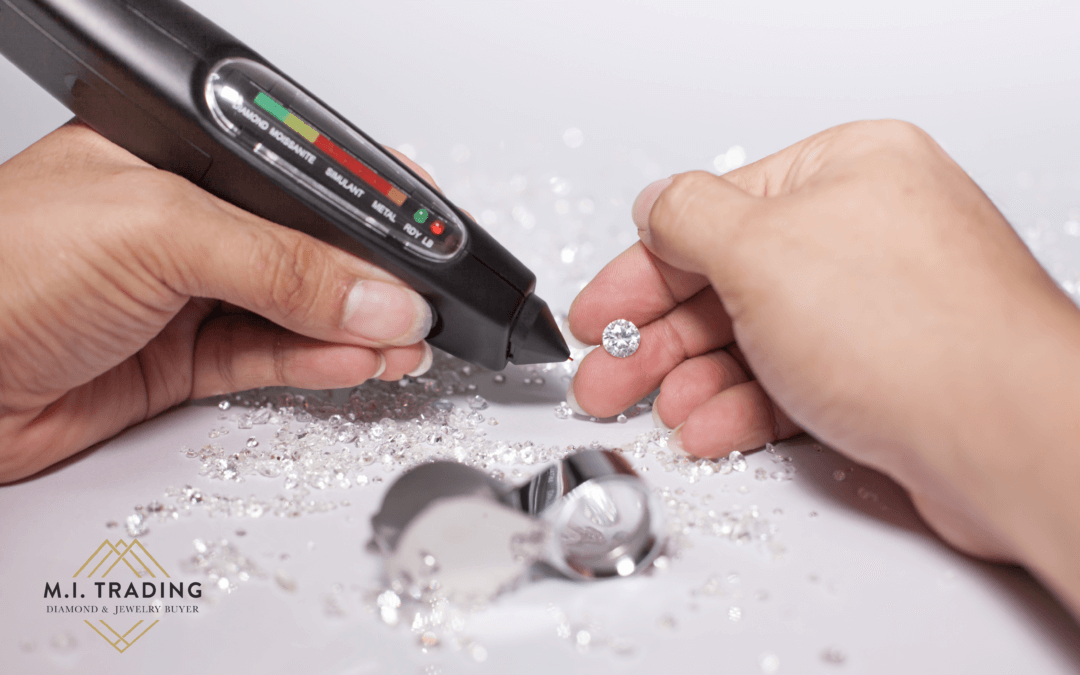
Understanding the grading of diamonds isn’t just for jewelers or gemologists. If you’re thinking about buying a diamond ring or selling inherited jewelry, learning how diamonds are evaluated gives you clarity, literally and figuratively. At M.I. Trading in Austin, we meet with people every day who want honest answers about what their diamonds are worth. So let’s walk through the process together.
What Does Diamond Grading Mean?
Diamond grading is how professionals determine a diamond’s quality. It’s done using universal standards, most famously the 4Cs: Cut, Color, Clarity, and Carat Weight. These factors help assess the stone’s appearance, structure, and overall value.
Grading isn’t about opinions. It follows strict procedures using magnification, lighting, and advanced tools. The most respected organization for grading is the GIA (Gemological Institute of America). A GIA diamond comes with a report describing the stone’s traits in precise detail. It explains exactly what you’re holding or buying.
Diamonds are unique. Even when two diamonds have the same shape or size, they may differ significantly based on internal characteristics or color variations. A clear understanding of the grading scale gives buyers confidence and helps sellers avoid being misled.
The 4Cs: Foundations of Diamond Quality
Carat Weight: What the Scale Really Tells You
A 1-carat diamond weighs 200 milligrams. Sounds technical, but it’s simple: more carats usually mean a higher price. Still, weight doesn’t always equal beauty. A larger diamond that’s poorly cut may appear dull, while a smaller stone with an ideal cut can dazzle.
Most people are surprised to learn that two diamonds with the same carat weight can look completely different. That’s because carat only refers to mass, not shape, cut, or sparkle. So when evaluating a diamond, carat weight is just the start.
Diamond Cut: The Sparkle Factor
Cut is what brings a diamond to life. The cut grade evaluates how well a diamond’s facets interact with light. A well-cut diamond reflects light evenly, creating fire and brilliance. Poorly cut stones may appear dark in the center, even if they’re large or high in carat.
The most famous cut is the round brilliant cut diamond, engineered for maximum sparkle. Other shapes like oval, cushion, emerald, or pear cuts are assessed by how well they handle light and proportion. Grading here involves looking at symmetry, polish, and proportion. This one factor largely determines the brilliance of the diamond.
Diamond Color: Subtle Differences, Major Impact
Color matters, even when you can barely see it. Diamonds are graded from D (completely colorless) to Z (light yellow or brown). The diamond color scale helps determine whether a stone has a visible hue. A white diamond with a higher color grade reflects more light, offering a brighter appearance.
What’s interesting is how other factors, including the metal setting, may influence color. A stone that appears colorless in a white gold band might show more yellow in a rose gold setting. The goal is to choose what fits your taste while understanding where it falls on the diamond grading spectrum.
Some people love the romantic warmth of a yellow diamond. Others prefer the icy purity of a D-graded white stone. Neither is right or wrong. It’s about understanding the range of color and how it affects value.
Clarity: What’s Inside Counts
Clarity refers to inclusions (internal flaws) or blemishes (surface flaws). The clarity scale runs from Flawless (no visible imperfections under 10x magnification) to Included (noticeable flaws). A diamond with few inclusions scores a higher clarity grade and often sells for more.
Even small flashes of color caused by light hitting an inclusion can reduce brilliance. That’s why clarity matters. Still, many diamonds that aren’t flawless are incredibly beautiful, especially if the inclusions are hard to spot.
Some diamonds with inclusions are called “eye clean,” meaning you won’t see the flaws without magnification. These offer excellent value for shoppers who want a beautiful diamond without the Flawless price tag.
Understanding Certified Diamonds
A certified diamond is graded by a reputable lab like the GIA. This certification ensures consistency and clarity. When you have a GIA diamond, you have a report that covers every detail: color grade, clarity grade, cut, carat, polish, symmetry, and even fluorescence.
We evaluate both certified and non-certified diamonds. Our approach follows industry standards, regardless of documentation. We often explain a diamond’s grading of diamonds profile alongside the certificate so sellers fully understand their options.
The GIA grading system is widely accepted as the gold standard. It allows both buyers and sellers to make informed decisions using a shared language.
What Influences Diamond Price?
A few things drive pricing:
- Carat weight
- Cut grade
- Diamond color grade
- Clarity grade
- Market demand
- Shape or style (some diamond shapes are trending)
Small changes in quality can lead to major shifts in price. For example, a diamond that’s one color grade or one clarity grade better can cost hundreds or thousands more, even if they look nearly identical to the naked eye.
How the diamond will look under natural light also affects perception. That’s why buyers should always view a diamond in person or ask for photos in daylight.
Shopping for a Diamond? Here’s What to Consider
If you’re ready to buy a diamond, the 4Cs should guide your decision, but don’t get tunnel vision. Your personal preferences matter, too. Maybe you’re drawn to the shimmer of a colorless white diamond. Or maybe you’re open to a warmer hue for a vintage setting.
Ask yourself:
- Do I want size over clarity?
- How important is the setting?
- Do I care if it’s certified?
The right diamond depends on what feels meaningful to you. And knowing how diamonds are graded helps you spot real value.
We offer guidance based on our years of expertise. We help clients understand diamond color, interpret reports, and choose the diamond that suits their goals.
Selling Diamonds in Austin
Many people come to us with estate pieces, engagement rings from a past chapter, or loose diamonds they’ve inherited. Understanding the grading of diamonds helps them feel confident in the evaluation process.
Here’s what you get when you meet with us:
- A private appointment
- A full walk-through of your diamond’s profile
- Honest, fair offers
- Time to think it over
We never push. That’s not our style. We explain where your diamond sits on the diamond grading scales and how that translates into a cash offer. Our evaluations are based on current market rates and decades of experience.
We help you assess the quality, but more importantly, we help you understand how that quality affects the offer.
What Else Can Affect Value?
- Point diamond sizes (e.g., 0.75 carat vs 1.00 carat)
- Grading laboratories used (some labs grade more loosely than others)
- Market availability
- Shape popularity
We’ve seen two diamonds with nearly identical specs valued very differently because of brand origin, polish, or grading scale than a diamond from another lab.
When we conduct an evaluation, we’re not guessing. We’re applying decades of experience plus real-time industry data to give you the clearest picture possible.
Why M.I. Trading?
Located in the heart of Austin, M.I. Trading is trusted across Central Texas. Founded by Moran Tairy, a gemologist, we specialize in safe, in-person evaluations and a calm, respectful experience.
We don’t use hype. We don’t use pressure. We use facts, kindness, and expertise to guide each client through the diamond-selling process.
Our services include:
- Evaluating estate jewelry
- Buying gold and silverware
- Diamond ring evaluations
- Luxury watch evaluations
You’re welcome to book an appointment even if you’re unsure about selling. We’ll give you a full breakdown and let you decide what’s next.
Final Thoughts: Knowledge is Leverage
The more you know about the grading of diamonds, the more confident you’ll feel when making decisions. Whether you’re holding onto something with emotional weight or buying a piece for someone you love, understanding what makes that stone valuable matters.
We turn that mystery into clarity, one honest conversation at a time.
Ready to learn what your diamond is worth?
Recent Comments